
Zinn Hub vs Fiverr

Zinn Hub is a newer gig marketplace designed around lower costs and language access, while Fiverr is the bigger and longer-established name. Fiverr sellers surrender 20% of each order, and buyers add a service fee over the top. At Zinn Hub, buyers face no platform fee, sellers retain their first $500, and listings, chat and calls are translated across 46 languages.
Zinn Hub stands out

No platform fee is charged to buyers.
A seller's first $500 is kept in full, at 100%.
Past that point, the cut shrinks to 8%, with Agency at 7%.
Bidding with proposals costs nothing, and nothing has to be purchased beforehand.
Listings, chat, reviews and text inside images are translated in both directions across 46 languages.
Live calls come with captions or a translated voice that speaks aloud.
Zinn Hub adds no payout fee of its own, and every listing accepts crypto.
Freelancers must pass an identity check and a skill check prior to listing.
Fiverr is strong
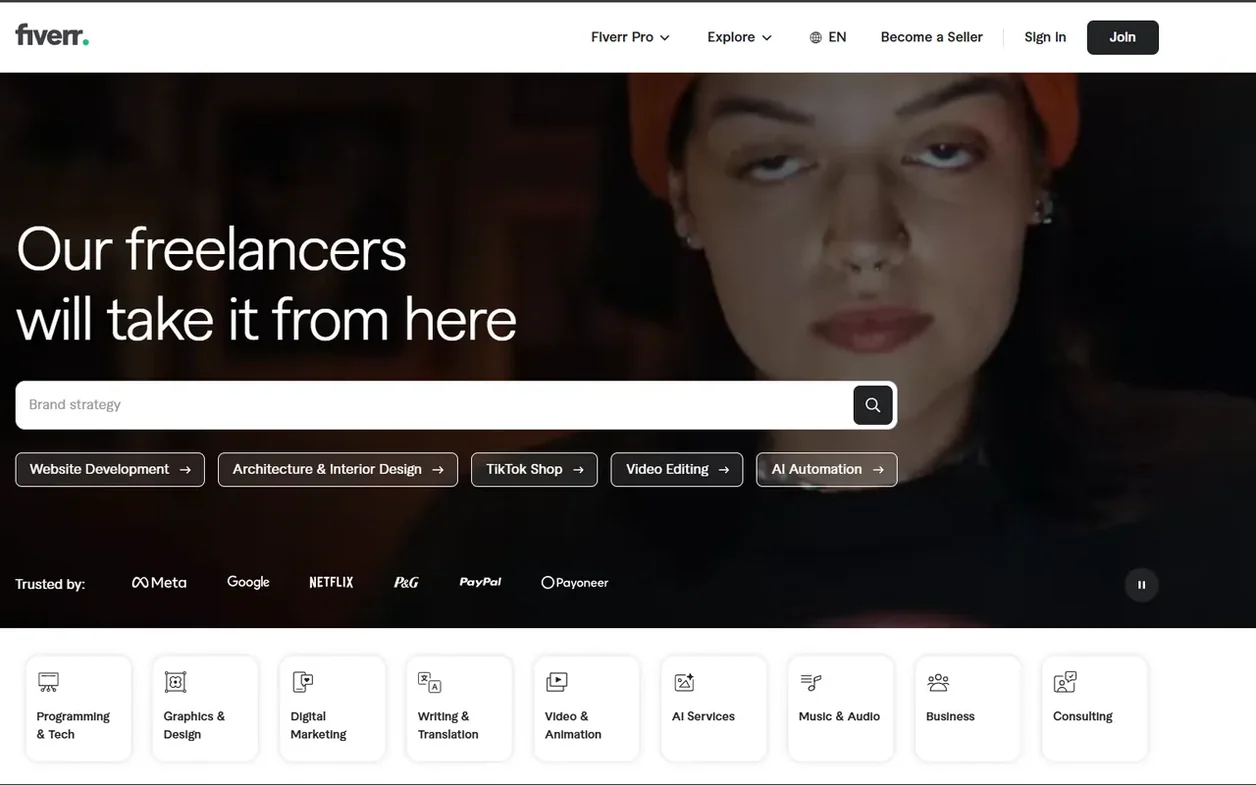
It is an established platform with a longer history.
It holds a bigger store of past orders and reviews.
Where they differ
Fiverr removes 20% of the seller's earnings on each order, whereas Zinn Hub begins at 0% on the first $500 and then drops to 8%.
Buyers on Fiverr pay an extra service fee, but buyers on Zinn Hub pay nothing.
Fiverr puts English first, while Zinn Hub translates listings, chat, reviews and calls in 46 languages.
Fiverr works as a shop for gigs, while Zinn Hub adds project briefs, a directory and live calls.
Withdrawing on Fiverr can cost money, while Zinn Hub applies no payout fee and accepts crypto on every listing.
Fiverr has been around longer and holds more past orders and reviews.
Before a freelancer may list on Zinn Hub, identity and skills are checked.
Fiverr asks you to pay for the privilege of an older platform, while Zinn Hub lets you keep more and removes language as an obstacle.
Written by Zinn Hub.
Back to Zinn Hub's listing, or visit Fiverr (opens in a new tab). More comparisons.